
Laura Meador Sanction: IRMS Testosterone Finding and Four-Year Ban

An independent arbitrator imposed a four-year period of ineligibility on masters weightlifter Laura Meador after an evidentiary hearing, the U.S. Anti-Doping Agency announced on September 3, 2026. USADA said a sample analyzed by isotope ratio mass spectrometry was consistent with testosterone or its metabolites coming from an external source.
The sanction began February 19, 2026, when a provisional suspension was imposed. USADA also said Meador's competitive results from February 10, 2023—the date the arbitrator found her testosterone use began—are disqualified, with medals, points, and prizes forfeited.
This article summarizes the published adjudication. It should not be read as a broader claim about the athlete beyond the official decision.
What USADA announced
According to the USADA sanction notice, Meador was 44 and from Germantown, Tennessee. USADA collected an in-competition urine sample at the United Masters Weightlifting Federation World Championships on December 5, 2025.
The event organizer had contracted USADA to conduct testing and results management. USADA says collection followed the World Anti-Doping Agency International Standards.
After a hearing on August 6, 2026, an independent arbitrator determined that Meador would receive a four-year sanction for the presence and use of an anabolic agent. The public announcement followed on September 3.
What IRMS does
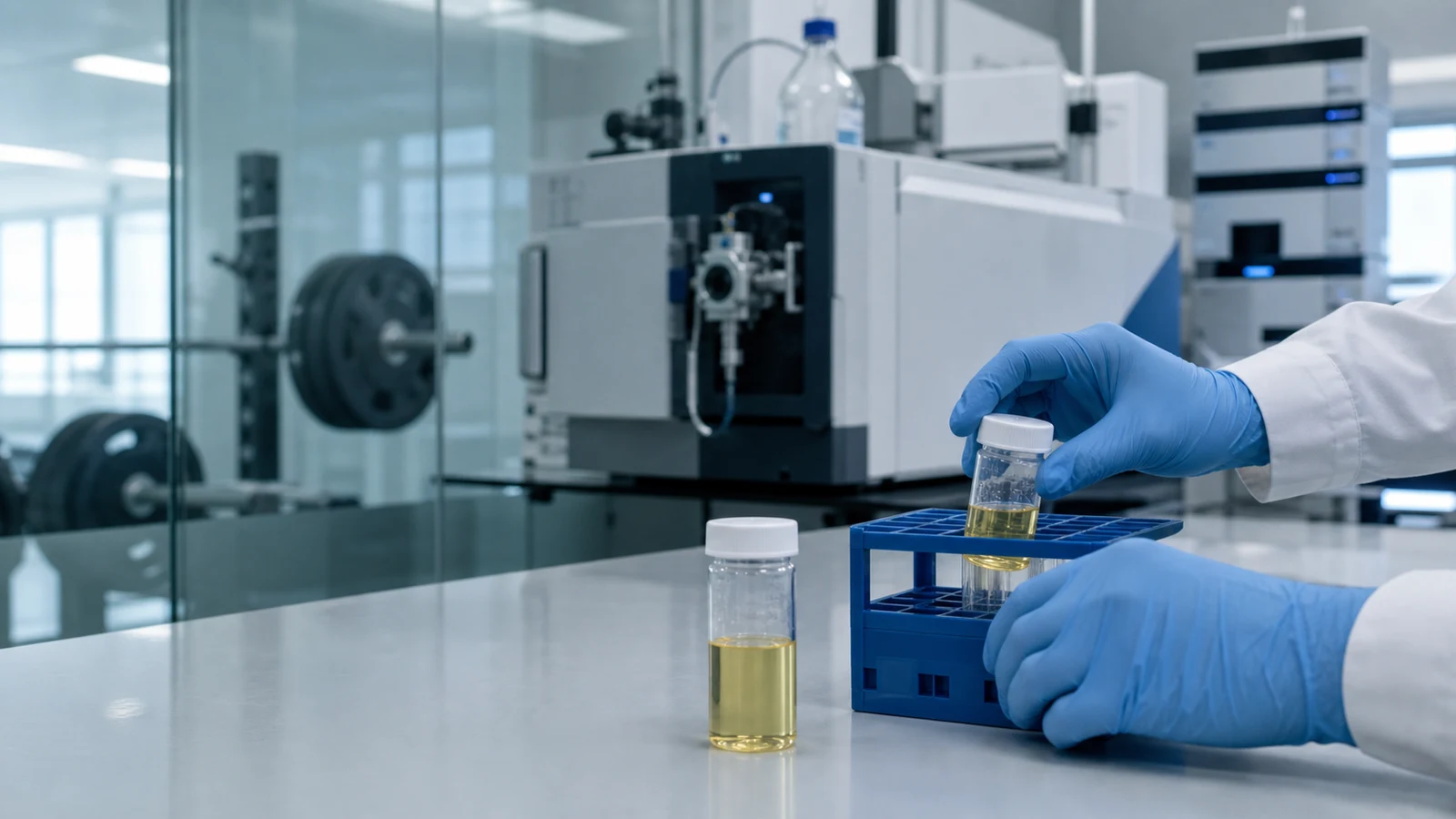
Isotope ratio mass spectrometry, or IRMS, compares carbon-isotope patterns in steroid compounds and reference compounds found in a urine sample. Testosterone produced naturally in the body and testosterone derived from many synthetic pharmaceutical sources can have different carbon-isotope signatures because of how their source materials were produced.
An anti-doping laboratory does not simply ask whether testosterone is present; everyone naturally produces it. The analytical question is whether the pattern is consistent with endogenous production or an exogenous source.
USADA said the IRMS analysis in this case was “consistent with the exogenous origin” of testosterone and/or its metabolites. The agency used stronger wording elsewhere in its notice to describe the differentiation capability of the test, but the result should still be reported in the exact terms of the decision.
IRMS evidence is one piece of a results-management process that can also include sample documentation, laboratory review, athlete explanations, therapeutic-use records, and a hearing when facts are contested.
Why testosterone is prohibited
Testosterone and its metabolites are classified as non-specified substances in the anabolic-agents class. They are prohibited at all times under the rules cited by USADA, including the relevant testing protocol, U.S. Olympic and Paralympic policy, International Weightlifting Federation rules, the World Anti-Doping Code, and the WADA Prohibited List.
“At all times” means both in and out of competition. “Non-specified” does not mean the substance was unidentified. In anti-doping terminology, specified and non-specified categories affect how sanctions and intent may be evaluated; anabolic agents such as testosterone are placed in the non-specified group.
There are legitimate medical uses for testosterone, but an athlete subject to anti-doping rules generally needs a valid therapeutic use exemption when the prohibited treatment is medically necessary. The published Meador notice does not present a valid exemption as changing the outcome.
How the four-year period is dated
USADA says the period of ineligibility began February 19, 2026, the date of the provisional suspension. Starting the final sanction on a provisional-suspension date gives credit for time already served under that restriction.
The disqualification period reaches farther back. Results on and after February 10, 2023 were disqualified because that was identified as the date use began. Ineligibility and result disqualification are related but distinct consequences: one controls future participation for a period, while the other removes results from a defined past period.
The notice states that affected medals, points, and prizes are forfeited. Event organizers and governing bodies use the final decision to adjust records under their rules.
Why an independent hearing matters
The case did not end with an uncontested administrative acceptance. USADA says an evidentiary hearing was held and an independent arbitrator rendered the decision. That means the public result follows a formal process in which evidence and arguments could be considered.
USADA links to its arbitral decisions archive for the underlying decision. The announcement is a concise summary, so readers seeking procedural detail should use the decision itself rather than filling gaps with assumptions.
This distinction is especially important in named-person coverage. A positive analytical finding starts results management; it does not authorize speculation about motive, suppliers, other competitions, or people around the athlete.
What athletes can learn
Masters athletes are not outside anti-doping rules when they enter covered events. Testing authority follows the event and governing framework, not assumptions about age, professional status, or prize money.
Athletes using prescribed hormone therapy should verify status before competition and address therapeutic-use requirements early. A prescription alone is not automatically an anti-doping exemption. Medication checks should use the applicable anti-doping resources, and complex cases deserve qualified medical and rules advice.
The decision also illustrates why ordinary testosterone concentration is not the only analytical route. IRMS can help laboratories evaluate origin. The site's report on the Jara MacDermott sanction explains another case in which IRMS and therapeutic-use questions appeared, though every case turns on its own record.
The confirmed facts here are limited and significant: an in-competition sample, an IRMS finding consistent with an external testosterone source, an evidentiary hearing, a four-year sanction beginning with the provisional suspension, and disqualification of results from the date use was found to begin. Staying inside that record is both more accurate and more useful than speculation.
More Peptides
 Peptides
FDA’s September 2026 Peptide Warning-Letter Sweep: What It Means
FDA posted warning letters to several peptide sellers on September 1. The letters focus on intended use, unapproved new drugs, misbranding, and injectable risks.
 Peptides
Jara MacDermott Sanction: Testosterone IRMS, TUE Rules, and the Two-Year Ban
USADA imposed a two-year sanction on weightlifter Jara MacDermott after a sample showed canrenone, amphetamine, and testosterone consistent with an external source.
 Peptides
Paul Askew Sentencing: How the Rodchenkov Anti-Doping Act Reached a Doping Supplier
Paul Askew received a six-month federal prison sentence after pleading guilty to a conspiracy involving testosterone and a professional track athlete.